
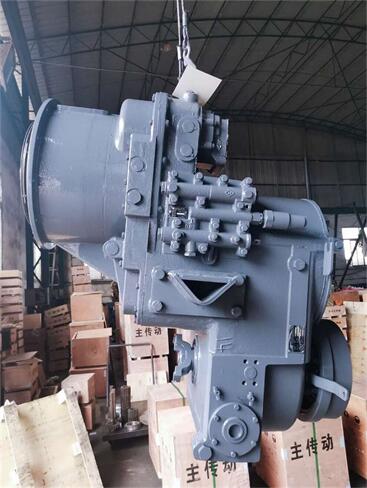
Wheel loader power shift transmission maintenance:
The normal service cycle of the gearbox is closely related to the operating habits, daily maintenance and high-quality maintenance of the driver. Regular replacement of qualified hydraulic transmission oil and the use of original accessories will prolong the maintenance cycle.
Loader power shift transmission hydraulic multi-plate wet clutch shift shift, each shift is composed of 2-5 friction plates and the corresponding pressure plate, hydraulic cylinder, etc. When the gear lever is manipulated in the gear, the pressure oil flows into the corresponding hydraulic cylinder through the control valve to push the piston to compress the driving disc and the driven disc, so as to achieve the purpose of power transmission. In practice, maintenance is often carried out when the machine cannot work properly, which leads to the loss of the best maintenance time and shortens the service life of the transmission. 1. The cause of clutch damage power shift transmission when the clutch is engaged, the pressure of the hydraulic oil resists the spring force to compress the friction plate. As the pressure of the hydraulic oil increases, the friction plate contacts the metal plate and gradually compresses, allowing the clutch to smoothly transfer the power of the flywheel to the transmission input shaft. Each time the gear is changed, the friction plate is rubbed against the steel, and the heat generated by the coolant is emitted. When the friction plate and steel plate thinner, more of the hydraulic oil is needed to fully engage, engine need to be further accelerated, friction plate on the steel friction time also increased, the resulting friction heat more, makes the hydraulic oil temperature, when the sealing temperature enough to change the transmission performance, transmission tends to leak. Internal leakage continues to cause heat increase from two aspects: high-pressure oil leakage through the damaged seal, so that the oil temperature continues to rise; As a result of the leak, the hydraulic pump may deliver more oil, and the pressure needed to ensure full clutch engagement also requires the engine to continue accelerating to produce a greater flow rate to the hydraulic pump. This vicious cycle can eventually cause the clutch to overheat or burn out until it completely fails. 2 clutch piston seal test when the loader running weak or oil temperature is too high, need to judge whether the clutch piston seal is not strict or insufficient pressure. However, it is sometimes difficult to determine the cause of routine testing. Especially in the absence of power, it is more difficult to check the seals of the assembled transmission assembly. At this point, a pressure valve can be used for testing. First remove the gearbox control valve (the control valve should be installed before the assembled gearbox), and then open 0.6-0.8mpa gas to each oil hole in the gearbox. If one of the holes passes through the gas, "bang" and does not leak or leak very little, then the clutch piston and the corresponding seal between the cylinder well; If you can not hear the piston compression friction plate and there is a large leakage sound, it indicates that the seal between the clutch piston and the cylinder is faulty, and the seal should be replaced. 3, gearbox failure prevention gearbox and gearbox bearings and gears are wearing parts, so the gearbox should be regularly checked and maintained. The typical maintenance interval of transmission abroad is 5000-10000h. According to our national conditions, it is suggested that the clutch wear should be checked every 2500 to 5000h to catch the abnormal situation at any time. Since the power shift transmission does not fail quickly, the chip first appears on the friction plate and can usually continue to be used for 750-1000h. During this period, regular inspection and maintenance, and timely replacement of friction plates, seals and individual bearings can damage undamaged parts (such as steel, gears, shafts, hydraulic cylinders and most bearings, etc.). Clutch in failure before often appear the following anomalies: (1) although the machine can work, but the oil in the gearbox has already deteriorated, reduced viscosity, containing metal impurities, so should be more than analysis. Gearbox oil sample before recommended oil change interval. Because clutch wear is a sign of the expansion of gearbox failure, if metal impurities enter the gear or jam the gear so that it can not be in the center position, if not shut down will destroy other parts in the gearbox. (2) The decline of shift performance is a sign of clutch damage. When the clutch starts to slip, the machine will rush forward even if the acceleration is smooth. At this time should stop maintenance. (3) clutch control oil level drop, when the machine must accelerate the clutch engagement, that the clutch has been excessive wear or seal failure phenomenon. Therefore, measuring the transmission oil pressure, observe the oil temperature rise, you can judge the clutch wear. The oil should also be analyzed. If iron or chromium particles appear in the oil, it indicates that the gear pair has begun to wear. In summary, if the seals and friction plates are replaced before clutch failure, the maintenance cost will be 30% lower than after clutch failure. Similarly,


